


Main Techniques in Sheet Metal Fabrication
1. Cutting
Cutting is the first step in sheet metal fabrication and can be done using several methods, including:
- Laser Cutting: This method uses a high-powered laser beam to make precise cuts in sheet metal.
There are three types of lasers used in laser cutting: CO2 (carbon dioxide), Nd (neodymium), and Nd-YAG (yttrium garnet and aluminum doped with neodymium impurities).
CO2 lasers have a high energy yield and a high output power ratio, and are used for cutting thin material, engraving, and drilling. Nd lasers have high energy but low repetition efficiency. They are used for engraving, drilling and welding.
Nd-YAG lasers have very high power and can cut thicker materials. However, it is more expensive to operate than CO2.
Laser cutters can work with aluminum, steel, copper, stainless steel, and other metals. They are best used to cut thin parts (with a maximum thickness of 15 mm for aluminum and 6 mm for steel), engraving and drilling.
The advantage of this process lies in its ability to make complex cuts with a minimum margin of error, in addition to its speed and energy efficiency.
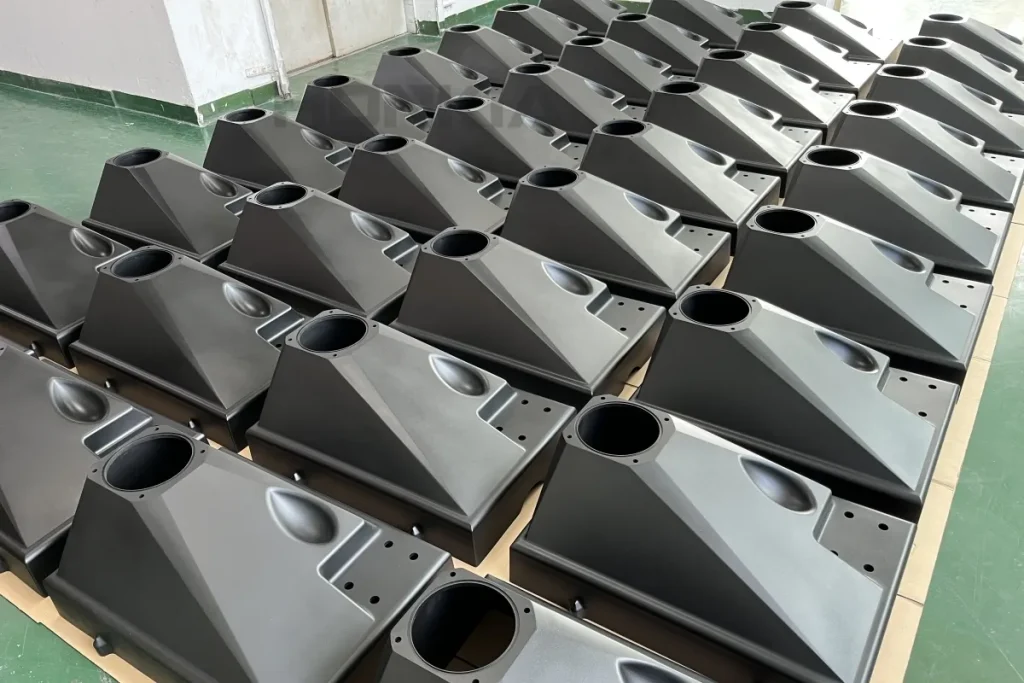
- Plasma Cutting: Uses an electric arc to ionize the gas and create a jet of plasma that melts and cuts through sheet metal. It is an effective method for cutting thicker parts, although it can result in a less clean finish compared to laser cutting.
Plasma cutters can cut very thick materials, up to 300 mm for aluminum and 200 mm for steel, with a tolerance of 0.2 mm. Other materials that are processed with plasma cutters are stainless steel, copper and other metal alloys. Depending on the complexity of the part to be produced, 2 or 3-axis cutters can be used.
Although plasma cutters are not as diverse or precise as waterjet and laser cutters, they are the best choice for thick electrically conductive metal parts, as they are faster and more cost-effective for cutting these types of materials.